

FIRSTEK - Your LiFePO4 Battery Cell Manufacturer with Reliable Solutions
With 20 years of industry experience, FIRSTEK enjoys a high reputation in the manufacturing and research and development of lead-acid batteries and lithium iron phosphate batteries.
High R&D Level
Our FIRSTEK R&D Institute is a comprehensive R&D center integrating material R&D and testing verification functions. We are committed to becoming a national-level technology incubation center and testing center, with research branches such as battery technology, battery applications, and battery equipment under our jurisdiction. At present, we have applied for and obtained a number of patents, and our research and development level is at the leading level in the industry.
Customize and OEM/ODM Your Project
FIRSTEK not only produces automotive batteries, VRLA/SLA batteries, LiFePO4 batteries, ESM (energy storage modules) and ESS (energy storage systems), solar home systems, but also customizes lithium-ion batteries and develops BMS to meet the battery needs of different applications.
Multiple Certifications
Our company has obtained multiple international certifications, including ISO9001, ISO14001, ISO45001, OHS MS18001, UL, CE, KS, VDS, CB, BIS, SASO. All our batteries are produced to strict standards. Our company has also won the title of high-tech enterprise.
Environmental Friendly
FIRSTEK closely integrates its business philosophy with the social environment and establishes an industrial chain including materials, batteries, system integration, recycling, etc. By mastering the echelon utilization technology of the entire industry chain, we form a closed loop of the echelon utilization industry chain, aiming to contribute to environmental protection.
-

48173125 3.2V100Ah LiFePO4 Battery Cell
• Model number: 48173125-100Ah. • Nominal voltage: 3.2V. • Nominal capacity: 100Ah. • Cell type:
Add to Inquiry -
Low Temperature 26650 3.2V3350mAh LiFePO4 Battery Cell
• Charging temperature: -20~60℃. • Discharge temperature: -40~+60℃. • Maximum continuous charging
Add to Inquiry -
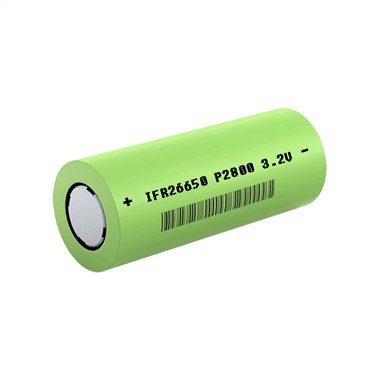
High Power 26650 3.2V2800mAh LiFePO4 Battery Cell
• Maximum continuous charging current:14A (3C). • Maximum continuous discharge current:42A (15C). •
Add to Inquiry -
26650 3.2V3000mAh LiFePO4 Battery Cell
• Model number: IFR26650N3000. • Nominal voltage: 3.2V. • Nominal capacity: 3000mAh. • Cell type:
Add to Inquiry -
26650 3.2V3300mAh LiFePO4 Battery Cell
• Model number: IFR26650E3300. • Nominal voltage: 3.2V. • Nominal capacity: 3300mAh. • Cell type:
Add to Inquiry -
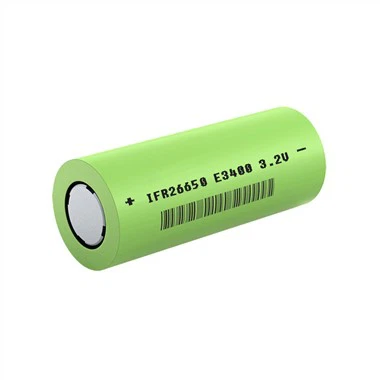
26650 3.2V3400mAh LiFePO4 Battery Cell
• Model number: IFR26650E3400. • Nominal voltage: 3.2V. • Nominal capacity: 3400mAh. • Cell type:
Add to Inquiry -
26650 3.2V3600mAh LiFePO4 Battery Cell
• Model number: IFR26650E3600. • Nominal voltage: 3.2V. • Nominal capacity: 3600mAh. • Cell type:
Add to Inquiry -
26650 3.2V3800mAh LiFePO4 Battery Cell
• Model number: IFR26650E3800. • Nominal voltage: 3.2V. • Nominal capacity: 3800mAh. • Cell type:
Add to Inquiry -
26650 3.2V4000mAh LiFePO4 Battery Cell
• Model number: IFR26650E4000. • Nominal voltage: 3.2V. • Nominal capacity: 4000mAh. • Cell type:
Add to Inquiry -
32700 3.2V6000mAH LiFePO4 Battery Cell
• Model number: IFR32700-6000. • Nominal voltage: 3.2V. • Nominal capacity: 6000mAh. • Cell type:
Add to Inquiry -
18650 3.2V1600mAh LiFePO4 Battery Cell
• Model number: IFR18650E1600. • Nominal voltage: 3.2V. • Nominal capacity: 1600mAh. • Cell type:
Add to Inquiry -
14500 3.2V600mAh LiFePO4 Battery Cell
• Model number: IFR14500E600. • Nominal voltage: 3.2V. • Nominal capacity: 600mAh. • Cell type:
Add to Inquiry






Brief Introduction to LiFePO4 Battery Cells
LiFePO4 battery cell is a battery that encapsulates lithium iron phosphate in a square or circular casing. The electrode sheets (anode, separator, cathode) in the casing are mainly stacked to form a battery pack. They contain more energy and offer greater durability because they are more compact. For the same volume, stacked bonded cells can release more energy at once and provide better performance. The common shapes of this kind of battery are prismatic and cylindrical.
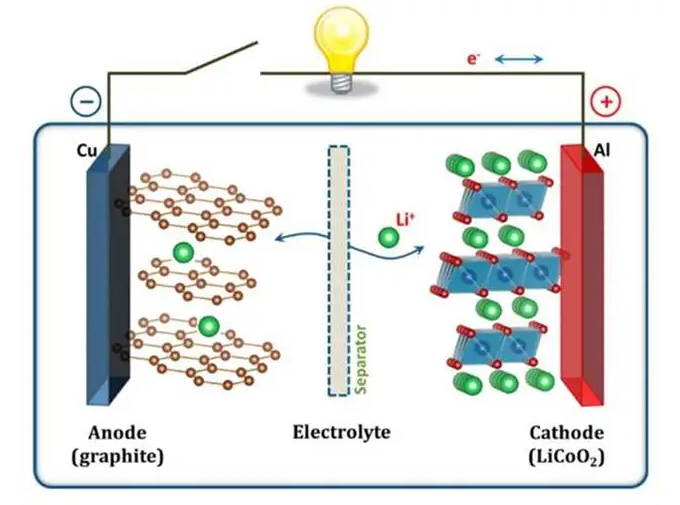
LiFePO4 Battery Cell mainly uses anode (negative electrode), cathode (positive electrode) and electrolyte as conductors. The anode of a discharge battery is the negative electrode, and the cathode is the positive electrode. The separator forms a barrier between the cathode and anode, preventing the electrodes from touching while allowing charge to flow freely between them. The cathode is a metal oxide and the anode is composed of porous carbon. During discharge, ions flow from the anode to the cathode through the electrolyte and separator. The charge reverses direction and ions flow from the cathode to the anode.
Main Features of LiFePO4 Battery Cells
Lightweight
LFP cells do have 50% more usable power, making them 70% lighter than lead-acid batteries. Plus, they're lighter than some lithium-ion batteries. They also feature smaller battery packs, providing more space. If also compared to lead-acid batteries, a battery box and wiring are required for installation. This is not the case with LiFePO4 battery cells. They usually have a prismatic or cylindrical design, so they are very compact.
Environmentally Friendly
The highlight of these batteries is that they are rechargeable. Plus, they don't leak, are non-toxic and recyclable. These batteries do not contain heavy or rare earth metals such as cobalt, nickel or lead. They are composed of materials such as graphite, iron, and copper. Lead-acid and nickel oxide batteries pose significant environmental risks. Since their internal chemicals degrade the structure over time, this can lead to toxic leaks. Another environmental advantage of LiFePO4 batteries is that the battery pack is easy to recycle at the end of its life.
Stable Chemical Properties
LFP battery cells are made of phosphate, which has excellent thermal and chemical stability and the safest lithium chemistry. To make it easier to understand, phosphate cells are non-flammable. This is relevant because lithium iron phosphate batteries will not explode or catch fire even in the event of a short circuit or collision.
High Charging Efficiency
Compared with other batteries, lithium iron batteries have higher discharge and charging efficiency. They last longer and also have the ability to cycle deeply while maintaining performance. In terms of battery life, the self-discharge rate is only 2% compared to 30% for lead-acid batteries. If the battery life is less than 50%, the power remains consistent. Furthermore, if we consider the charging time, they can be fully charged in just two hours, sometimes even less.
Advantages of LiFePO4 Battery Cells
Long Lasting
LiFePO4 Battery Cells can be recycled up to 5,000 times at 80% depth of discharge without performance degradation. They require no active maintenance to extend their service life. Additionally, the batteries have no memory effect and you can store them for longer periods of time due to their low self-discharge rate (<3% per month). Lead-acid batteries require special maintenance. Otherwise, their lifespan will be shortened even more.
Good Flexibility
LiFePO4 Battery Cells are usually designed in cylindrical or prismatic shapes, so they are easy to assemble. They can meet the needs of small capacity battery packs. For example, lithium iron phosphate battery pack products require a 12.8V 2000mAh battery pack. Ordinary batteries generally cannot meet the requirements, but several lithium iron phosphate cells connected in series or parallel can meet the needs.
Good Stability
When these battery packs are combined, the gap between the cells is large, so heat dissipation is good. These batteries have high capacity, so when they are combined into a large lithium iron phosphate battery pack, fewer cells are used, which means the consistency of the battery pack is better. Generally speaking, the greater the number of cells, the worse the consistency and the worse the performance of the battery pack.
High Efficiency
Lithium iron phosphate batteries (LiFePO4) have 100% usable capacity. Additionally, their fast charge and discharge rates make them ideal for a variety of applications. Fast charging reduces downtime and increases efficiency. High discharge pulse currents provide bursts of power over short periods of time.
Wide Operating Temperature Range
Lithium Iron Phosphate (LiFePO4) operates over a wide temperature range, making lithium batteries ideal for a variety of applications, including those withstanding extreme temperatures. Lithium is the best choice for applications that run out of battery or operate in extreme weather conditions.
Safety
To achieve high battery safety, we use only the highest quality batteries using the safest technology available today: Lithium Iron Phosphate (LiFePO4 or LFP). Combined with the battery management system (BMS) developed by our innovative engineering team, we can ensure battery safety and reliability.
Two Common LiFePO4 Battery Cells

LiFePO4 Prismatic Battery Cells
A prismatic battery is a battery with chemicals encapsulated in a rigid casing. Its rectangular shape allows efficient stacking of multiple cells in a battery module. There are two types of prismatic batteries: the electrode sheets (anode, separator, cathode) inside the casing are either stacked or rolled up and flattened. For the same volume, stacked prismatic cells can release more energy at once and provide better performance, while flat prismatic cells contain more energy and provide more durability. Prismatic batteries are mainly used in energy storage systems and electric vehicles. Their larger size makes them unsuitable for small devices such as e-bikes and cell phones. Therefore, they are more suitable for energy-intensive applications.
LiFePO4 Cylindrical Battery Cells
Cylindrical batteries are batteries enclosed in a rigid cylindrical can. Cylindrical batteries are small and round, allowing them to be stacked in devices of various sizes. Unlike other battery formats, their shape prevents swelling, an unwelcome phenomenon in batteries as gas can accumulate in the casing. Cylindrical batteries were first used in laptop computers, which contained three to nine cells. Cylindrical batteries are also used in electric bicycles, medical equipment and satellites. Due to their shape, they are also important in space exploration. Other cell formats are deformed by atmospheric pressure. For example, the last rover sent to Mars ran on cylindrical batteries. Formula E high-performance electric race cars use the exact same batteries as the rover.

Typical Applications of LiFePO4 Battery Cells
LiFePO4 battery cells are widely used in electric passenger cars. One of the main considerations in electric vehicle design is to achieve the best balance between energy density, power output and safety. LiFePO4 batteries excel in this regard. Its impressive energy density allows electric vehicles to travel greater distances on a single charge, solving a common concern among EV owners about range anxiety. In addition, its stable chemical composition reduces the risk of thermal runaway, ensuring the safety of occupants and vehicles.
LiFePO4 battery cells have made significant progress in the field of commercial electric vehicles. Electric buses, vans and trucks require powerful and reliable battery systems to support their intensive usage patterns. LiFePO4 batteries have a long cycle life and are suitable for vehicles with frequent charge and discharge cycles. Additionally, their thermal stability and safety properties are critical for applications involving large battery packs that need to perform flawlessly in a variety of conditions.
LiFePO4 battery cells are compact and lightweight, making them ideal for e-bikes and scooters. These vehicles require batteries that are both efficient and space-saving. LiFePO4 batteries meet these requirements, providing sufficient power for short commutes while maintaining a small form factor. Their inherent safety features are particularly valuable in applications where the battery is located close to the rider.
LiFePO4 battery cells are not limited to vehicle applications, they are also used in stationary energy storage systems. These systems store renewable energy or excess energy generated during off-peak hours and release it when demand is high. LiFePO4 batteries excel in this area due to their high charge and discharge efficiency, fast response time and long cycle life. They contribute to grid stability and facilitate the integration of renewable energy sources.
LiFePO4 battery cells are increasingly used in recreational vehicle and marine applications. In an RV, these batteries provide reliable, efficient power for lighting, appliances, and climate control systems. Likewise, in marine environments where safety and durability are critical, lithium iron phosphate batteries provide a trusted solution for electric propulsion, lighting and shipboard systems.
Specialty electric vehicles, including golf carts, forklifts and airport ground support equipment, all benefit from the properties of LiFePO4 battery cells. These batteries can handle frequent charge and discharge cycles, ensuring extended working hours. Their ability to provide stable power output increases the efficiency of these vehicles, thereby reducing downtime and increasing productivity.
Main Differences Between Prismatic and Cylindrical LiFePO4 Battery Cells
Shape is not the only factor that distinguishes prismatic and cylindrical LiFePO4 battery cells. Other important differences include their size, number of electrical connections, and power output.
Size
Prismatic cells are much larger than cylindrical cells and therefore contain more energy per cell. To give a rough idea of the difference, a single prismatic cell can contain the same energy as 20 to 100 cylindrical cells. The smaller size of cylindrical cells means they can be used in applications that require less power. Therefore, they are used in a wider range of applications.
Connections
Because prismatic cells are larger than cylindrical cells, fewer cells are needed to obtain the same amount of energy. This means that, for the same volume, cells using prismatic cells require fewer electrical connections to be soldered. This is a major advantage of prismatic cells, as there are fewer opportunities for manufacturing defects.
Power
Cylindrical batteries may store less energy than prismatic batteries, but they are more powerful. This means that cylindrical batteries can release energy faster than prismatic batteries. The reason is that they have more connections per ampere hour (Ah). Therefore, cylindrical cells are ideal for high-performance applications, while prismatic cells are ideal for optimizing energy efficiency. Examples of high-performance battery applications include Formula E racing cars and the Ingenuity helicopter on Mars. Both require extreme performance in extreme environments.
LiFePO4 battery cells have a number of specifications that are important to consider when selecting a battery for a particular application. Here are some common specifications to consider:
Capacity
This is the amount of energy the battery can store. Higher capacity means the battery can store more energy and provide more operating time for the device.
Voltage
The voltage and current of a battery determine the amount of power it can deliver. For the same current, higher voltage can provide more power to the device.
Energy Density
Energy density is a measure of how much energy can be stored in a given volume or mass of the battery. The cell with high energy density will be more compact and lighter, but it may also have a shorter lifetime and may be more expensive.
Discharge Rate
This is the rate at which a battery can discharge its stored energy. It determines how quickly it can deliver its stored energy. For example: If the battery capacity is 1Ah, 1C is 1A discharge 1h to complete the discharge, 5C is 5A discharge 0.2 hour to complete.
Charge Rate
This is the rate at which a battery can be charged, typically measured in amperes (A). Higher charge rate means the battery can be charged more quickly. Similar to discharge rate: 1C is 1A charge 1h to complete charge, 5C is 5A charge 0.2 hour to complete.
Self-Discharge Rate
Self-discharge rate of a battery is the loss of power when the battery is not working, which is unavoidable. The lower the self-discharge rate, the longer the battery can maintain its power.
Maximum Pulse Discharge Current
Maximum pulse discharge current is the battery in order to meet the conditions of use and the need for a short period of high current pulse discharge. Pulsed current can provide a strong current in an instant to start certain devices. Like engines.
Operating Temperature Range
This is the range of temperatures over which a battery can be used without damaging it. Such as charging temperature, discharging temperature, maximum current operating temperature, etc.
Internal Resistance
All batteries have internal resistance, and lithium batteries are no exception. The resistance value of the internal resistance of lithium batteries also determines the quality of lithium batteries.
Life Cycle
The life cycle of a battery is a measure of how many times it can be charged and discharged before it fails. More cycles means that the battery will last longer before it needs to be replaced.
Safety
The safety of a battery is an important consideration, especially for applications where the battery is being used in a high-risk environment. It’ s generally related to the material of the cell: LFP( LiFePO4 ) is more stable than NCA ( LiNiCoAlO2 ).
Size and Weight
Suitable size and weight are important considerations in design and practical applications.
Cost
The cost of a battery is an important consideration for many applications. Cheaper battery cells may not provide the same performance or life as more expensive batteries, but the right cost to choose a cell is the best choice.
Maintenance Tips for LiFePO4 Battery Cells

Use the Correct Charger
Best SOC Range
Avoid High Current Discharge
Use BMS
Suitable Working Environment Temperature
Proper Compression for Cells
Reasons for the Failure of Lithium Iron Phosphate Batteries
Lithium iron phosphate (LiFePO4) batteries are generally considered to be reliable and have several advantages over other lithium-ion battery chemistries. However, like any technology, they can experience failures due to various reasons. Here are some common causes of failure for lithium iron phosphate batteries:
Overcharging
Exceeding the recommended voltage limits during the charging process can lead to the degradation of the battery and potential failure. LiFePO4 batteries are sensitive to overcharging, and if not properly managed, it can cause the formation of metallic lithium, which can lead to internal short circuits and thermal runaway.
Over Discharging
Similar to overcharging, discharging a LiFePO4 battery beyond its recommended voltage limits can cause damage to the cells. Over discharging can result in the formation of lithium plating on the anode, which can lead to reduced capacity, increased internal resistance, and potential cell failure.
High Temperatures
Elevated temperatures can accelerate the aging process and reduce the overall lifespan of LiFePO4 batteries. Heat can promote side reactions within the cells, causing degradation of the electrode materials and electrolyte, leading to capacity loss and decreased performance.
Mechanical Stress
Physical damage to the battery, such as dropping or crushing, can cause internal shorts, compromising the integrity of the cell and leading to failure.
Manufacturing Defects
Faulty manufacturing processes or quality control issues can result in defective batteries with internal inconsistencies, such as variations in cell voltage or capacity. These defects can lead to premature failure or reduced overall performance.
Poor Cell Balancing
In multi-cell battery packs, if individual cells are not balanced properly, it can result in some cells being overcharged while others are over-discharged. This imbalance can cause stress on the cells and lead to failure.
Process Quality Management
We implement the following quality management processes:

Factory Photos
The picture below is our factory:

Frequently Asked Questions
As one of the most professional lifepo4 battery cell manufacturers and suppliers in China, we're featured by high quality and good service. Please rest assured to buy lifepo4 battery cell at reasonable price from our factory. Contact us for datasheet and quotation.
lifepo4 9 6 v, , car battery mobile service