

Why Choose Us?
High R&D Level
Our FIRSTEK R&D Institute is a comprehensive R&D center integrating material R&D and testing verification functions. We are committed to becoming a national-level technology incubation center and testing center, with research branches such as battery technology, battery applications, and battery equipment under our jurisdiction. At present, we have applied for and obtained a number of patents, and our research and development level is at the leading level in the industry.
Customize and OEM/ODM Your Project
FIRSTEK not only produces automotive batteries, VRLA/SLA batteries, LiFePO4 batteries, ESM (energy storage modules) and ESS (energy storage systems), solar home systems, but also customizes lithium-ion batteries and develops BMS to meet the battery needs of different applications.
Multiple Certifications
Our company has obtained multiple international certifications, including ISO9001, ISO14001, ISO45001, OHS MS18001, UL, CE, KS, VDS, CB, BIS, SASO. All our batteries are produced to strict standards. Our company has also won the title of high-tech enterprise.
Environmental Friendly
FIRSTEK closely integrates its business philosophy with the social environment and establishes an industrial chain including materials, batteries, system integration, recycling, etc. By mastering the echelon utilization technology of the entire industry chain, we form a closed loop of the echelon utilization industry chain, aiming to contribute to environmental protection.
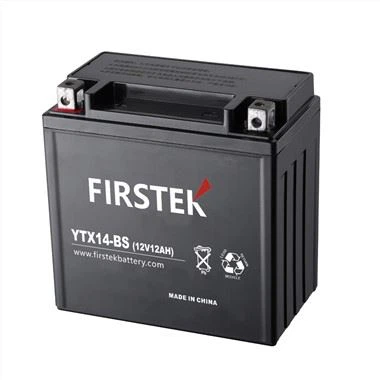
Motorcycle Battery is a type of battery specifically designed for use in motorcycles. It is an electrochemical device that stores energy and provides power to the motorcycle's electrical system. The battery is responsible for starting the motorcycle's engine and also powers various electrical components, such as headlights, taillights, and the ignition system.
-

• Dimension(L*W*H*TH): 150*87*145 mm . • Battery type: Motorcycle battery, Maintenance free
Add to Inquiry -
• Dimension(L*W*H*TH): 150*87*130 mm . • Battery type: Motorcycle battery, Maintenance free
Add to Inquiry -
• Dimension(L*W*H*TH): 135*75*139 mm . • Battery type: Motorcycle battery, Maintenance free
Add to Inquiry -
• Dimension(L*W*H*TH): 113*70*130 mm . • Battery type: Motorcycle battery, Maintenance free
Add to Inquiry -
• Dimension(L*W*H*TH): 150*60*130 mm . • Battery type: Motorcycle battery, Maintenance free
Add to Inquiry -
• Dimension(L*W*H*TH): 135*70*105 mm . • Battery type: Motorcycle battery, Maintenance free
Add to Inquiry -
• Dimension(L*W*H*TH): 135*70*105 mm . • Battery type: Motorcycle battery, Maintenance free
Add to Inquiry -
• Dimension(L*W*H*TH): 120*60*130 mm . • Battery type: Motorcycle battery, Maintenance free
Add to Inquiry -
• Dimension(L*W*H*TH): 113*70*105 mm . • Battery type: Motorcycle battery, Maintenance free
Add to Inquiry -
• Dimension(L*W*H*TH): 113*70*85 mm . • Battery type: Motorcycle battery, Maintenance free
Add to Inquiry


Advantages of Motorcycle Battery
Easy Engine Start
A good battery ensures a smooth and reliable start to your motorcycle's engine. It provides the initial power required to crank the engine and get it running.
Power Supply for Electronics
Motorcycle batteries also supply power to various electrical components on your bike, such as the headlights, taillights, blinkers, speedometer, and more. Without a battery, these components would not function properly.
Enhanced Safety
A properly working battery ensures the proper operation of safety features like headlights and taillights, which are essential for visibility and safety on the road. It also powers the blinkers, which help other drivers know when you're turning.
Extended Riding Time
A healthy battery can provide power for extended periods, allowing you to enjoy longer rides without worrying about the battery dying.
Emergency Backup
In case of an emergency, such as a breakdown or accident, a fully charged battery can provide power for essential components like the headlights or emergency lights, increasing your visibility and safety.
Convenience
Having a reliable battery means you don't have to worry about jump-starting your bike or pushing it to a nearby repair shop. It adds to the overall convenience and enjoyment of motorcycle ownership.
Types of Motorcycle Battery
Wet Cell Batteries
Wet cell batteries are also known as lead-acid batteries, conventional batteries and flooded cell batteries. These were the first motorbike batteries available on the marketplace and are still used to this day. A row of plastic stoppers in the top of a lead-acid or traditional motorbike battery can typically be recognised (3 stoppers in a 6-volt battery & 6 stoppers in a 12-volt battery). Lead-acid batteries normally feature a white/opaque plastic lower case with greater and lower battery acid levels on the front.
Dry Cell Batteries
Dry cell batteries are also known as maintenance-free batteries and sealed type batteries. Maintenance-free or sealed motorcycle batteries are typically supplied with the acid separately, and after the battery is full and the cap is placed on top, there is no need to monitor or top up the acid. The letters YTX, CTX, or GTX generally begin the reference numbers for maintenance-free or sealed motorbike batteries (e.g YTX9-BS).
Gel Motorbike Batteries
Gel motorcycle batteries are also known as gel-filled batteries and gel acid batteries. The battery number in gel acid or gel-filled batteries usually begins with the prefix YT, CT, GT, or YTZ, CTZ, or GTZ (e.g. YT9B-4 or YTZ10-S). The housing of these batteries is usually black, blue, or grey, with a black, blue, or grey top. These batteries are loaded with a gel state acid and sealed when they are manufactured, so they don't need to be topped up. Gel acid batteries are frequently used in motorcycles where the battery must be mounted at an angle or on its side (due to the gel acid not moving around). Gel battery electrolytes are wrapped in a gelling agent (such as fumed silica) to preserve the acid in a gel condition. Because gel-filled batteries are hermetically sealed and cannot be refilled, there is no need to remove the top or check the acid level.
Application of Motorcycle Battery
Starting the Engine: The most important application of a motorcycle battery is to provide the initial power required to crank the engine and start it. The battery supplies a high current to the starter motor, which turns the engine over and ignites the fuel mixture, initiating the combustion process that powers the motorcycle.
Ignition System: The battery powers the ignition system, which generates the high voltage necessary to ignite the air-fuel mixture in the engine's cylinders. This ensures that the engine runs smoothly and efficiently.
Electrical Components: The battery provides power to various electrical components of the motorcycle, including the headlights, tail lights, turn signals, brake lights, and horn. These components are essential for safe and legal operation of the motorcycle, as they improve visibility and allow communication with other road users.
Charging Systems: Some modern motorcycles are equipped with alternators or generators that charge the battery while the engine is running. This ensures that the battery maintains its charge and is ready to provide power when needed, such as when starting the engine or using electrical components.
Accessories and Customizations: Motorcycle batteries are also used to power various accessories and customizations, such as sound systems, GPS navigation devices, heated grips, and other electronic components. These additional features enhance the riding experience and functionality of the motorcycle.
What to Look for in a Motorcycle Battery
Understanding the benefits and lifespan of different motorcycle battery types is important when buying a battery, but there are some other factors to take into account based on how your customers will be using the motorcycle. Is it a commuter bike or reserved for weekend riding? Will the motorcycle stay on smooth, paved city streets, or could it hit some rough terrain?
Power rating: This refers to the voltage of the battery, which is often a 6- or 12-volt. A higher power rating means the battery is better equipped for more powerful vehicles, and higher power ratings can also be useful for determining the battery’s durability.
Reserve capacity: Once you install the new battery in a motorcycle, you’ll want to know how long it will stay charged. This metric is called the reserve capacity.
Amp hour: The amp hour measures electric charge, telling you how much amperage a battery will provide in one hour. Motorcycles usually have about 5 AH to 20 AH, with higher amp-hour ratings being better.
Cold-cranking amps: Also referred to as CCA, this metric will tell you the number of amps a battery can deliver within 30 seconds at freezing point (0°C or 32°F). A higher CCA means the battery is more reliable in colder weather.
The first and simplest and one of the most important specs not always included in the alpha-numeric code is that of its voltage, and this will be clearly marked on the battery as either 6v or 6 volts, or 12V or 12 volts.
The majority of motorcycles run on 12 volts, but there are many scooters and small bikes that run on 6 volts, and you do not want to fit a 6-volt battery on a bike that requires 12 volts, and vice versa.
Conventional flooded batteries are marked 6N or 12N to show voltage, and you can also tell by the number of cell caps – 6-volt batteries have 3, 12-volt batteries have 6 (there is one cap per cell, and each cell is always 2 volts).
The next important detail is that of physical size and terminal layout. With batteries being housed in confined areas, if you do not buy the correct one it is likely that it will not fit, or you may find that the positive lead is next to the negative terminal and this will do your bike no good at all.
Physical size is easy, you can just measure the dimensions of the battery you have (assuming it is the correct size), and check they are the same as the battery you want. The same goes for the terminal layout, a quick visual check sorts that. Terminal type may be important too, depending on the housing and access, but it is not always crucial.
Next, there is the ampere-hour (Ah) rating, and this describes the battery’s ability to provide a certain current for a particular amount of time. A 14 Ah (10hr) battery can provide 1.4 Amps for 10 hours, a 20 Ah (20hr) battery can provide 1A for 20 hours.
As long as the Ah rating of the battery you are buying is at least equal to the specified Ah for your bike, it does not matter if you get a battery with a higher rating; you are getting a better battery, as long as the voltage, size and terminal layout are the same.
Finally, there is the cold cranking amps (CCA) rating, and this describes the battery’s ability to provide enough current to cold-start the bike. A big bike loaded with gadgets and gimmicks needs a good Ah rating so it can keep everything powered, and a large-bore high-compression V-twin needs a good CCA rating for those frosty mornings.
As long as the CCA rating of the battery you are buying is at least equal to the specified CCA requirement for your bike (if given), it does not matter if you get a battery with a higher rating, as long as the physical size and terminal layout is the same.
So, when buying a replacement battery either get the same one from the same manufacturer using the coding and specs given in the handbook and marked on the battery itself. Or, you can use the coding to get the equivalent from a different manufacturer. If you’re not sure, match battery voltage, size and terminal layout.

Check the battery leads are tight on the terminals, and the leads and the terminals are clean and free of corrosion. Clean the terminals and lead ends and cover them with a dedicated battery terminal spray or petroleum jelly (Vaseline).
Keep the battery case clean.
If the bike is not being used regularly, charge the battery using a dedicated and preferably intelligent motorcycle battery charger every month to six weeks. Do not use a car battery charger. Note that Lithium batteries have different charging requirements to lead-acid batteries and require a different type of charger. Always follow the instructions on the battery and the charger.
The electrolyte level in conventional wet/flooded batteries goes down as part of the natural electrochemical process in which water in the electrolyte turns to gas and is released via the vent. If the level drops too low and it exposes the lead plates to the air, they will deteriorate rapidly leading to battery failure.
It is important to make a regular check of the electrolyte level and top it up with deionised or distilled water. Do not use tap water, and do not refill with battery acid. If you have to add much water, the battery may need recharging.
When Should You Replace Your Motorcycle Battery?
You should replace your motorcycle battery when it shows signs of wear or when it no longer holds a charge effectively. Here are some common signs that indicate it's time to replace your motorcycle battery:
Difficulty Starting the Engine
If your motorcycle takes longer than usual to start, or if it cranks slowly or weakly, it may be a sign that the battery is losing its ability to hold a charge.
Battery Age
If your battery is more than five years old, it's a good idea to consider replacing it, even if it's still starting the bike. Batteries typically have a limited lifespan and can gradually lose their ability to hold a charge over time.
Corrosion or Leaks
If you notice corrosion or leaks on the battery terminals or casing, it's a good indication that the battery is aging and may need to be replaced.
Voltage Drop
Using a voltmeter, you can check the voltage of your battery. If the voltage is significantly lower than the specified range (usually 12.6 to 12.8 volts for a fully charged battery), it may be time to replace the battery.
Frequent Jump Starts
If you find yourself jump-starting your motorcycle often, it's a sign that the battery is not holding a charge well and may need to be replaced.
Swelling or Bulging
If the battery casing shows signs of swelling or bulging, it's a sign of internal damage and the battery should be replaced immediately.
Tips to Storing Motorcycle Batteries
Test batteries
Run the motorcycle batteries at least once a week during seasons when the bike is not in use.
Charge batteries. You can keep stored motorcycle batteries fully charged with a trickle charger to ensure the battery will work when you are ready to ride. You'll only need to maintain about a 50% charge for lithium batteries.
Remove batteries
Rather than keeping the battery inside the motorcycle, you can disconnect it from the vehicle and connect it to an automatic charger to store it for longer periods when the bike isn't in use. This can help extend the life of the battery.
Store in a warm place
Because the cold can hinder the lifespan of the battery, store the disconnected battery or the motorcycle and its connected battery in a warm place, like a climate-controlled garage. This can help control vapor loss, a common problem for flooded motorcycle batteries.
What Is the Lifespan of a Motorcycle Battery?
The lifespan of a motorcycle battery depends on various factors, including the type of battery, its quality, the conditions it is used in, and the maintenance it receives. Generally speaking, most motorcycle batteries last between two and four years.
Lead-acid batteries, which are the most common type used in motorcycles, typically have a lifespan of around three years. This assumes that the battery is properly maintained and regularly charged. If the battery is not properly maintained, it may have a shorter lifespan. For example, if it is frequently discharged to a low state of charge or is not charged regularly, it may degrade prematurely. Some factors that can affect the lifespan of a motorcycle battery include:

Temperature
Extreme temperatures, both hot and cold, can shorten the lifespan of a battery. High temperatures can cause the battery to overheat and discharge more quickly, while cold temperatures can slow down the chemical reactions within the battery, making it difficult to start the motorcycle.

Vibration
Motorcycles generate a lot of vibration, which can affect the internal components of the battery. Over time, this vibration can cause the plates within the battery to crack or break, reducing its performance and lifespan.

Sulfation
If a battery is not charged regularly or is left in a discharged state for too long, it can develop sulfation. Sulfation is the formation of sulfate deposits on the lead plates within the battery, which can prevent the battery from charging and discharging properly.
How Do I Know if My Motorcycle Battery Is Fully Charged?
To determine if your motorcycle battery is fully charged, you can use the following methods:
Observe the charging light
When the battery is charging, the charger's light will usually appear red. When the battery is fully charged, the color of the indicator light will change to green or stop flashing, indicating that the battery is fully charged.
Check the electrolyte
Observe the electrolyte in each cell inside the battery with your eyes. If vigorous bubbling occurs, this may mean that the battery is fully charged.
Use a multimeter to measure voltage
Use a multimeter to measure the voltage of the battery. If the voltage reaches around 12.80V and does not rise again for more than two hours, this may mean that the battery is fully charged.
Judging by the power-on time
If your motorcycle battery is 60Ah, the required charging current is about one-tenth of the battery capacity, that is, 6A. Charging with this current usually takes about 5 hours to fully charge. If you charge with low current, it may take about 10 hours to fully charge.
Process Quality Management
We implement the following quality management processes:

Our Factory
With accumulated 20 years experience in the industry, FIRSTEK has established its name in Lead-acid battery & LiFePO4 battery manufacturing and R&D. FIRSTEK not only produces car battery, VRLA/SLA battery, Motorcycle battery, Battery Plates, Lead acid replacement (LiFePO4) battery, ESM(Energy Storage Modules) & ESS(Energy Storage Systems), Solar Home System, but also customizes lithium ion battery and develops BMS to meet the battery requirements of different applications. Ultimately, aim to be part of all clients’ growth.

Ultimate FAQ Guide to Motorcycle Battery
As one of the most professional motorcycle battery manufacturers and suppliers in China, we're featured by high quality and good service. Please rest assured to buy motorcycle battery at reasonable price from our factory. Contact us for datasheet and quotation.
lead acid battery 4 volt, e bike lead acid battery, 12 volt 7ah sealed lead acid rechargeable battery